skip to main |
skip to sidebar

- Roy Howell played for three teams from 1974-1984. Howell was drafted by the Texas Rangers in 1972 (4th overall pick in the draft). Roy played in the minors from 1972-1974. He earned a late season call-up in 1974 after batting .281 with 22 HR for AAA Spokane. He batted .250 in 44 AB in '74 and became the starting third baseman for Texas the following season.
- In 1975 Howell batted .251 with 10 HR in 125 games. He was a below-average defender--his fielding percentage was usually below the league average. Roy batted .253 with 8 HR in 140 games in 1976.
- After starting the 1977 season 0 for 17, Howell was traded to the expansion Toronto Blue Jays for Steve Hargan, Jim Mason, and $200,000. Roy missed the last week of June and most of July but still batted .302 with 10 HR in 381 AB. In 1978 Howell represented the Blue Jays in the All Star Game, appeared as a pinch hitter, and grounded out. He batted .270 with 8 HR and 61 RBI in 140 games.
- Howell had his biggest power year in 1979. He homered 15 times and had a career-high 72 RBI while batting .247 in 138 games. Roy's last season as a regular was 1980. He played in 142 games and batted .269 with 10 HR. After the 1980 season Howell became a free agent and signed with the Milwaukee Brewers.
- In 1981 Howell played for a winning team for the first time in his career. Roy batted .238 in 244 AB and homered six times. In the divisional series Roy was 2 for 5 with two walks. Roy batted .260 in 300 AB in 1982 but was hitless in 14 AB in the ALCS and the World Series.
- By the 1983 season Howell was mostly a DH. He batted .278 in 194 AB in 1983 and .232 in 164 AB in 1984. After the 1984 season Roy was released. He signed with the San Francisco Giants but was cut during spring training in 1985. He played in 68 games for Philadelphia's AAA Portland club and then retired.
- After his retirement Roy opened an insurance business and played in the Senior Professional Baseball League in 1989. He did some coaching and managing for the San Diego Padres organization during the early 2000s. Roy now manages and is the president of the San Luis Obispo Rattlers baseball club. He also conducts youth baseball clinics in San Luis Obispo, CA.
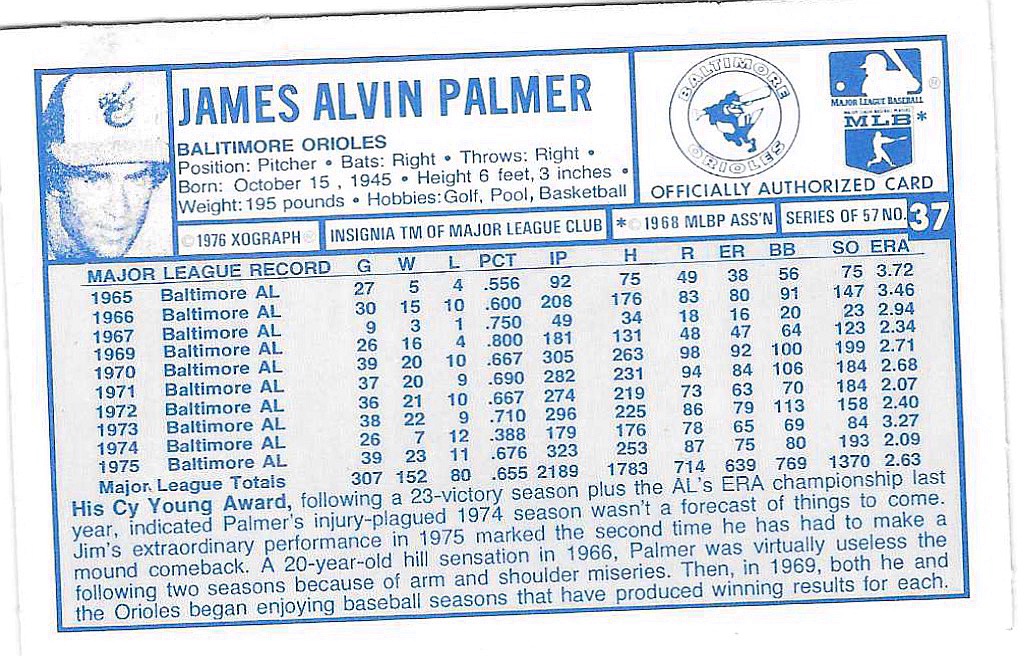
- Liked to face: Mike Flanagan (.375 in 40 AB); Nolan Ryan (.343 in 35 AB); Glenn Abbott (.382 in 34 AB)
- Hated to face: Jim Palmer (.175 in 80 AB); Bob Stanley (.162 in 37 AB); Luis Tiant (.190 in 42 AB)

- Bernie Carbo was drafted by the Cincinnati Reds in 1965. He played in the minors through the 1969 season and showed his readiness for the majors by batting .359 for Indianapolis in '69. Carbo came up at the end of the season and was hitless in three at bats.
- In 1970 Carbo was a close second to Carl Morton in NL Rookie of the Year voting. He batted .310 with 21 HR, 63 RBI, and 94 walks in 365 at bats. His .454 on base percentage and good power gave him one heck of a strat-o-matic card that year. Bernie was hitless in 14 at bats in the NLCS and the World Series. This was the only year Bernie would be a starter.
- Carbo had a major sophomore jink in 1971. His batting average dropped to .219 and he hit only 5 HR in 310 AB. After a slow start in 1972 (.143 in 21 AB) Carbo was traded to the St. Louis Cardinals on May 19 for Joe Hague. Bernie hit .258 for the Cardinals in 302 AB in '72.
- Bernie batted .286 in 308 AB with an OBP of .397 in 1973. After the season he and Rick Wise were traded to the Boston Red Sox for Reggie Smith and Ken Tatum.
- Carbo was a useful 4th outfielder/DH/pinch hitter for the Red Sox in '74 and '75. He batted .249 and hit 12 HR in 1974. Bernie did better in 1975, batting .257 with 15 HR and a .409 on base percentage. Carbo didn't play in the ALCS, but he had an excellent World Series against his former team (Cincinnati), hitting 2 HR and a double in eight at bats. His home run in the 8th inning of game 6 tied the game.
- In 1976 Carbo split the season between the Red Sox and the Milwaukee Brewers. He played in 17 games for the Red Sox then was traded on June 8 for Bobby Darwin and Tom Murphy. For both teams Carbo batted .235 with 5 home runs in 238 AB. After the season the Brewers sent Carbo back to the Red Sox (along with George Scott) for Cecil Cooper.
- Bernie had a good season as a backup in 1977, hitting 15 HR and batting .289 in 228 at bats. In 1978 Carbo again played for two teams. He started with the Red Sox and then was purchased by the Cleveland Indians on June 15. He batted .282 in 220 AB for the two clubs. Bernie became a free agent after the 1978 season and signed with the St. Louis Cardinals.
- Carbo played sparingly in 1979 (.281 in 64 AB mostly as a pinch hitter). In 1980 he was exclusively a pinch hitter. Bernie started with the Cardinals (.182 in 11 AB) and was released on May 27. The Pittsburgh Pirates signed Carbo on September 1. He was 2 for 6 as a pinch hitter for the Pirates and then was released at the end of the season. Bernie tried to hook on with the Detroit Tigers in 1981 but hung 'em up after batting .190 in 19 games for AAA Evansville.
- After his playing career Bernie spent some time as a hairdresser. Several years after the end of his career Carbo was able to kick drugs and alcohol and in 1993 he founded Diamond Club Ministry in Alabama. Here is a June 23, 2009 newspaper article about Carbo and his ministry.
- Here is a "Where are they now" article about Carbo.
- Liked to face: Bill Hands (.366 in 41 AB); Mike Torrez (.429 in 35 AB); Steve Blass (.333 in 33 AB)
- Hated to face: Gaylord Perry (.167 in 54 AB); Jim Palmer (.147 in 34 AB); Pat Dobson (.148 in 27 AB)


- I wonder why the Cubs (and sometimes the White Sox) got the "floating heads" team cards. I like them since it's easier to figure out who was who.
- The Cubs were a mediocre team in 1976. They were 75-87 (4th place in the NL East). Jim Marshall was replaced as manager by Herman Franks after the 1976 season. The Cubs had identical 75-87 records in Jim's two full seasons managing the club. Jim also managed the Oakland A's in 1979 (54-108, .333) and is currently a scout for the Arizona Diamondbacks.
- Attendance: 1,026,217 (7th in NL)
- Team Batting Average: .251 (6th in NL)
- Team Home Runs: 105 (4th in NL)
- Team ERA: 3.94 (11th in NL)
- Team Fielding Pct: .978 (5th in NL)
- NL All Stars: Steve Swisher (C)
- Team batting leader: Bill Madlock (.339)
- Team home run leader: Rick Monday (32)
- Team RBI leader: Bill Madlock (84)
- Team Wins leader: Ray Burris (15)
- Team Losses leader: Ray Burris/Bill Bonham (13)
- Team ERA leader: Bruce Sutter (2.70)
- Team Strikeout leader: Rick Reuschel (146)
- Team Saves leader: Bruce Sutter (10)


- Mickey Scott was born in Weimar, Germany in 1947. There have been 29 major league players who were born in Germany--all but three of them were born in 1900 or earlier. Only one player (Tobi Stoner) was born in Germany after Mickey Scott.
- Mickey Scott was drafted by the New York Yankees in 1965. He had good stats in the minors in 1965 and 1966, but didn't pitch in 1967. Mickey came back in 1968 and pitched well in AA (8-6, 2.58 ERA), but didn't fare as well in AAA in 1969 (6-5, 4.76 ERA). After the '69 season Mickey was traded with cash to the Chicago White Sox for Pete Ward. According to baseball reference, he pitched for Baltimore's AAA club (Rochester) in 1970 but wasn't dealt to the Orioles until September 23, 1970. Perhaps he was on loan to the Orioles and then they decided to acquire him.
- Scott was in Rochester again in 1971. He made the Orioles in 1972 and appeared in 15 games (0-1, 2.74 ERA). In 1973 he started with the Orioles and was traded to the Montreal Expos after appearing in one game. Scott went 1-2 with a 5.25 ERA for the Expos in '73.
- In April of 1974 Mickey went back to the Orioles. He was the player to be named later in a deal for John Montague which was made a year earlier. Scott was sent back to Rochester for the 1974 season and then was shipped to the California Angels after the season.
- Mickey spent three years (1975-1977) with the Angels. He had good years in 1975 (4-2, 1 save, 3.29 ERA in 50 games) and in 1976 (3-0, 3 saves, 3.23 ERA in 33 games). In 1977 he wasn't as good (0-2, 5.62 ERA in 12 games). He made his last appearance on June 6, 1977. Scott spent some time pitching for AAA Columbus (Pirates organization) in 1977 and 1978 and then finished up with AA Charlotte (Orioles organization).
- Hated to face: George Brett (.615 in 13 AB); Rod Carew (.385 in 13 AB)


- Rick Manning played for two clubs from 1975-1987. This card and his cover shot in Baseball Digest in June 1976 made me think he was a great "Pete Rose" type of player. Manning was drafted by the Cleveland Indians in the 1972 draft (2nd overall pick) when he was still 17 years old. Rick played in the minors from 1972-1975 and was promoted to the Indians after batting .316 in 30 games for AAA Oklahoma City in 1975.
- Manning had a good rookie season in '75. He batted .285 in 120 games and stole 19 bases. He didn't receive Rookie of the Year consideration since a couple of guys named Fred Lynn and Jim Rice were also rookies that year. Here is a September 1, 1975 Sports Illustrated article about Rick and the Cleveland Indians. Here is a November 1975 Baseball Digest article.
- Rick's best season was probably 1976. He batted .292 in 138 games and won the Gold Glove Award. Manning was a center fielder for most of his career and usually had fielding percentages above the league average.
- Manning missed a good chunk of time from mid June through August. He played in only 68 games and batted .226.
- From 1978-1982 Manning played CF in most of the Indians' games, usually batting in the mid-.200s. He didn't have a lot of power and didn't walk all that much either. In 1983 Rick started with the Indians and was traded to the Milwaukee Brewers on June 15 for Gorman Thomas and two others. He finished the '83 season as the Brewers' starting CF and was also the regular in 1984. During the last three years of his career Rick was a fourth outfielder. He retired after the 1987 season. One highlight of his career was catching the final out of Len Barker's perfect game in 1981.
- In the late 1980s Rick (along with Ralph Bruno) popularized the "Cheese Head" thing that is worn by many Green Bay Packer fans.
- Manning has been broadcasting for the Indians for almost 20 years.
- Liked to face: Mike Torrez (.358 in 58 AB); Larry Gura (.314 in 51 AB); Dennis Eckersley (.364 in 44 AB) -- I wonder if Eck knocked Manning down a few times.
- Hated to face: Dennis Leonard (.186 in 59 AB); Dave Stieb (.156 in 45 AB); Ron Guidry (.075 in 40 AB)


- Tommy Harper was signed by the Cincinnati Reds in 1960. After playing in the minors from 1960-1962, Harper had a cup of coffee at the end of the 1962 season. He batted .174 in 23 at bats.
- In 1963 Harper became the regular right fielder. He batted .260 and stole 12 bases while being caught only once. Except for one season (1968 when he was a backup guy), this would be Tommy's lowest stolen base total until his last season in 1976.
- Harper was a fourth outfielder in 1964 but still managed to steal 24 bases. Here is a May 1964 Baseball Digest article about Tommy. He had his first big season in 1965, leading the NL in runs scored with 126. He also homered 18 times. He started in RF in 1966 and had a better batting average (.278), but his numbers in the other areas were lower. Here is a September 1966 Baseball Digest article about Harper. Tommy was a fourth outfielder in 1967 and batted only .225 in 365 at bats. After the season he was traded to the Cleveland Indians for three players.
- Tommy started in LF for Cleveland in 1968 but batted only .217. After the 1968 season Harper was picked by the Seattle Pilots in the expansion draft. In 1969 Harper's batting average wasn't much better (.235), but he led the AL in stolen bases with 73. Here is an August 1969 Baseball Digest article about Harper.
- The Pilots moved to Milwaukee in 1970 and the move seemed to agree with Harper. Tommy had his best season as he batted .296 with 31 home runs. He appeared in the 1970 All Star game and was caught stealing after being inserted as a pinch runner for Harmon Killebrew. Harper was a versatille player in 1970 as he started over 50 games at 2B and 3B and 21 games in CF.
- Tommy played all over the place again in 1971 but his numbers were down (.258 with 14 HR and 25 stolen bases). Harper was traded to the Boston Red Sox after the season in a multi-player deal.
- Harper spent three seasons (1972-1974) with the Red Sox. He started in CF in 1972 and had a season that was similar to his '71 season. In 1973 Tommy started in LF and received some minor MVP consideration. He led the AL in stolen bases with 54 and batted .281 with 17 HR and 71 RBI. His legs started to go in 1974 and he became a backup, batting .237 with 28 stolen bases in 118 games. After the '74 season Harper was traded to the California Angels for Bob Heise.
- Tommy was a fourth outfielder with the Angels in 1975. He didn't do much with the Angels (.239 in 285 AB) and he was purchased by the Oakland A's on August 13 for the stretch run. Harper played well for the A's in the last six weeks of the season -- he batted .319 in 69 at bats and stole seven bases without being caught. He finally appeared in the postseason in 1975 and walked in his only plate appearance. Harper was released after the season and caught on with the Baltimore Orioles during spring training in 1976. He didn't do a whole lot for the Orioles (.234 in 77 at bats) and was released after the season.
- Harper had several stints as a coach. He coached for the Red Sox from 1980-1984 but was fired during spring training in 1985 after complaining in the media about the team allowing the segregated Elks Club in Winter Haven, FL to invite only white personnel to its establishment. Tommy later sued the Red Sox for wrongful termination and won his case. He coached with the Montreal Expos from 1990-1999 and then went back to the Red Sox to coach from 2000-2002. He is still a player development consultant with the Red Sox.
- Liked to face: Dave McNally (.375 in 56 AB); Clyde Wright (.381 in 63 AB); Jim Perry (.351 in 57 AB)
- Hated to face: Mike Cuellar (.192 with 29 strikeouts in 99 AB); Vida Blue (.189 in 74 AB); Bob Gibson (.158 in 38 AB)